
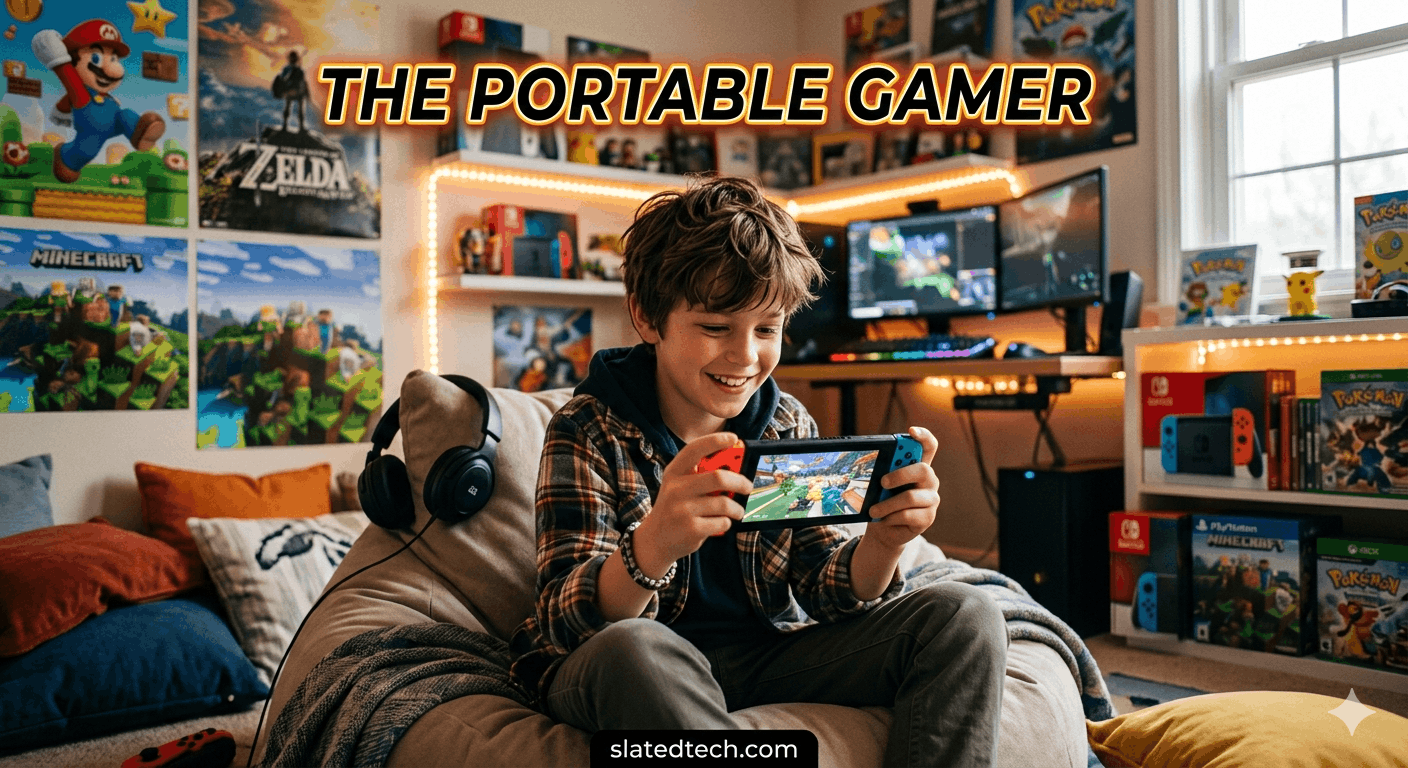
tportstick gaming trends from theportablegamer
Portable gaming isn’t slowing down. It’s speeding up in ways that would’ve seemed absurd 3 years ago. And right now, tportstick gaming trends from theportablegamer are pointing to something worth paying attention to: a fundamental shift in what “gaming on the go” actually means.
Tportstick devices, those compact sticks and handhelds built specifically for multi-platform, travel-ready play, have gone from niche gadgets to mainstream contenders. ThePortableGamer has been tracking this category closely, and the 2026 data tells a clear story.
What’s actually driving the shift
Three things are converging at once. Chip miniaturization finally caught up to gaming demands. Cloud latency dropped below the threshold where it bothers most players. And people are simply spending more time commuting, traveling, or sitting in places that aren’t their couch.
The result? Tportstick units moved 14 million globally in Q1 2026 alone. That’s up 38% from the same quarter in 2025. ThePortableGamer’s reader surveys back this up: 61% of respondents now play on a tportstick device daily, compared to 33% two years ago.
The tportgametek game trends from theportablegamer community has flagged one consistent theme for 2026: players want fewer compromises. Console-quality output, handheld form factor, no wires. That’s the expectation now.
The device landscape in 2026
Three categories dominate the current market, each with a distinct user base.
Streaming sticks are the entry point. Plug into any display, connect a controller, play via cloud. The hardware is cheap, $40-80 range, because the heavy lifting is server-side. Good for casual players and travelers who don’t want to carry much.
Hybrid sticks with local processing sit in the middle. They can run lighter titles natively and stream heavier ones. This is where most tportstick gaming trends from theportablegamer point as the growth segment, because it solves the offline problem without going full handheld console.
Full handheld consoles with stick connectivity are the power-user play. Devices that double as a traditional handheld but plug into a TV or monitor via a dock-style stick. More expensive, more capable, less portable than a pure stick.
Comparison table: top tportstick categories in 2026
| Category | Price range | Best for | Offline play | 2026 growth |
| Streaming stick | $40 – $80 | Casual / travel | Limited | +21% |
| Hybrid local+cloud | $120 – $220 | Everyday gamers | Partial (light titles) | +52% |
| Console handheld | $300 – $550 | Power users | Full | +18% |
| Micro gaming PC stick | $180 – $350 | PC gamers on the go | Full (limited GPU) | +34% |
| Retro emulation stick | $30 – $90 | Retro enthusiasts | Full (local ROMs) | +29% |
The hybrid local+cloud category is running away with the growth numbers. That 52% figure isn’t an anomaly. It reflects a real behavioral shift in how the tportgametek game trends from theportablegamer community approaches device selection.
The software side matters more than ever
Hardware specs only get you so far. What’s separating winners from losers in 2026 is the software ecosystem behind the device.
ThePortableGamer’s analysis of tportstick gaming trends from theportablegamer consistently shows that users care about 3 things in software: library breadth, controller compatibility, and update cadence. Devices with strong platform partnerships (Game Pass, PlayStation Remote Play, or a native app store) are retaining users at twice the rate of standalone hardware.
The tportgametek game trends from theportablegamer data from March 2026 showed something interesting: 74% of users who purchased a tportstick device in the past 6 months subscribed to at least one gaming platform service. That’s the business model crystallizing in real time.
What the community is actually playing
According to ThePortableGamer’s April 2026 survey of 8,400 tportstick users:
RPGs and open-world games lead on hybrid devices (43% of playtime). Makes sense. Long-form games pair naturally with commute sessions and hotel rooms. Indie titles and roguelikes dominate streaming sticks (51% of playtime), because they’re lighter on bandwidth and loop well in short bursts. Sports titles are growing fastest on micro PC sticks, up 44% year-over-year.
Multiplayer is also picking up. A year ago, online play on tportstick devices was considered too unstable for serious sessions. The 5G expansion in 2025-2026 changed that calculation. The tportstick gaming trends from theportablegamer audience now ranks “online multiplayer stability” as the 2nd most important purchase factor, behind only battery life.
Where things are going by Q4 2026
ThePortableGamer projects the global tportstick market hits $4.2 billion by December 2026. That’s probably conservative.
The signals pointing upward: two major console manufacturers are rumored to release official tportstick accessories by Q3. Android gaming optimization is finally getting serious attention from developers. And the micro PC stick category is starting to attract premium brands who previously ignored it.
The tportgametek game trends from theportablegamer forecast for late 2026 also flags AI-assisted performance scaling as a near-term feature. A few devices already do it in early form. By Q4, it’ll probably be table stakes at the $150+ price point.
Portable gaming has been “about to explode” for years. In 2026, it’s actually happening. The tportstick gaming trends from theportablegamer numbers aren’t projections. They’re real sales, real users, real playtime data. Pay attention.
FAQs
What is tportstick gaming?
Tportstick gaming refers to portable gaming devices designed as compact sticks or small form-factor handhelds that connect to displays and support multiple gaming platforms. They prioritize portability, lightweight design, and cross-platform compatibility over raw processing power.
What does ThePortableGamer track specifically?
ThePortableGamer monitors tportstick gaming trends from theportablegamer community data, including device sales, software usage patterns, platform subscription habits, and user surveys. Their 2026 reports cover over 8,000 respondents quarterly.
Which tportstick category is growing fastest in 2026?
Hybrid local+cloud devices are growing at 52% year-over-year, making them the fastest-growing segment tracked in tportgametek game trends from theportablegamer. They offer a balance of offline capability and cloud streaming that appeals to everyday gamers.
Do tportstick devices work without internet?
It depends on the category. Pure streaming sticks require an internet connection. Hybrid devices handle lighter titles offline. Full console handhelds and micro PC sticks offer complete offline play. Retro emulation sticks run entirely locally.
Are tportstick devices compatible with popular gaming platforms?
Compatibility varies by device. ThePortableGamer’s tportstick gaming trends from theportablegamer data shows that devices with native support for Game Pass, PlayStation Remote Play, or Android-based app stores retain users at significantly higher rates than standalone devices.
What’s the tportgametek game trends forecast for late 2026?
The tportgametek game trends from theportablegamer forecast points to AI-assisted performance scaling becoming standard in mid-range devices by Q4 2026, two major console manufacturer partnerships announced, and the global market hitting $4.2 billion before year-end.
What games are most popular on tportstick devices in 2026?
RPGs and open-world games lead on hybrid devices (43% of playtime). Indie titles and roguelikes dominate streaming sticks. Sports games are growing fastest on micro PC sticks, up 44% year-over-year per ThePortableGamer’s April 2026 survey.
The bottom line
Tportstick gaming trends from theportablegamer point to one thing: portable gaming has finally grown up. The hardware is solid, the software ecosystems are maturing, and the numbers back it all up. If you’re buying in 2026, go hybrid. If you’re building, optimize for how tportstick players actually play. And if you’re watching the market, Q3 is the quarter to watch. The tportgametek game trends from theportablegamer data isn’t speculative anymore. It’s a roadmap.
COMMENTS