
// tl;dr
Make a free account. Lurk for a week. If you’re logging in daily and the conversations actually help, then think about premium. The downside of trying programgeeks social is basically zero.
What programgeeks social media actually is
ProgramGeeks Social is a community platform built for one crowd: people who write code. You get forums, project rooms, profiles that double as portfolios, a job board, and a library of tutorials and how-to guides. The pitch is simple. Strip out the memes and the recruiter spam, keep the programming talk.
You’ll see it written two ways online, programgeeks social and programgeeks social media, and both point at the same thing: a focused network for developers, students, and tech folks who’d rather talk shop than chase likes. It runs free at the core with a paid tier bolted on top. I’ll get to the money in a second.
The whole reason it exists is the noise problem. Post a thoughtful technical breakdown on a mainstream feed and watch it sink while a cat video sails past. A code-only feed feels different. Weirdly, scrolling programgeeks social can feel productive.
What you actually get
Most of the value sits in a handful of features. Here’s the honest rundown, with a ✅ for the parts that pull their weight and a ⚠️ for the ones that depend on the crowd showing up.
| Feature | What it does |
|---|---|
| Discussion forums | Threaded coding Q&A, moderated by actual programmers ✅ |
| Project hub | Start, join, or contribute to open-source builds with other members ✅ |
| Portfolio profiles | Pin your repos, list skills, show real work ✅ |
| Knowledge library | Tutorials, eBooks, and guides in one searchable place ✅ |
| Webinars & livestreams | Learn from people who’ve shipped real software 🎥 |
| Job board | Developer roles with far less recruiter spam ✅ |
| Badges & leaderboards | Gamified rep for helping others ⚠️ |
The forums are the heart of it. Threads get answered by people who’ve debugged the same thing, not by someone farming engagement. When you’re stuck on a bug at 2 AM, that difference is the whole ballgame.
Free vs premium: what’s behind the paywall
You can join programgeeks social media without spending a cent. The free plan covers the forums, your profile, community groups, the job board, and most of the library. Premium adds deeper resources and a few perks, billed monthly or yearly.
| Plan | What you get |
|---|---|
| Free | Forums, profile + portfolio, community groups, job board, most tutorials ✅ |
| Premium 💳 | Advanced resources, exclusive webinars, deeper tutorials, monthly or annual billing |
My honest take: start free, use it for a few weeks, and only pay once you keep bumping into the limits. Subscribing to a community before you know the community shows up is how you end up with another charge you forget to cancel.
The good stuff
The signal-to-noise ratio is the real draw. Every post is about code, tooling, or tech work, so your feed stops being a slot machine and starts being useful.
The people building programgeeks social are developers themselves, and it shows. Project rooms, repo-friendly profiles, peer mentoring. The features read like they came from someone who’s actually pushed a fix at midnight, not from a growth team chasing daily active users.
And the career angle is real. Members report finding mentors, collaborators, and remote roles through the platform. A junior dev in a small town getting matched with a startup, that story shows up more than you’d expect, which is the best argument for joining programgeeks social media while it’s still small enough to get noticed in.
Where it falls short
Now the part the 5-star reviews gloss over. ❌
The user base is still thin. Next to LinkedIn platform, GitHub, or Stack Overflow, the crowd is small, and a small crowd means slower answers and fewer job posts. A focused network only pays off once enough people actually log in.
Public information on the platform is limited too. Hard numbers on users, funding, and roadmap are scarce, so you’re partly trusting the vibe. Before you sink real time or money in, read the privacy policy and community guidelines yourself. A trustworthy community usually makes that stuff easy to find.
Moderation is a moving target. Keeping spam and low-effort posts out of a growing space is a constant grind, and quality can wobble as it scales. None of this is a dealbreaker. It’s just the tax you pay for joining something early.
Who should actually join
programgeeks social
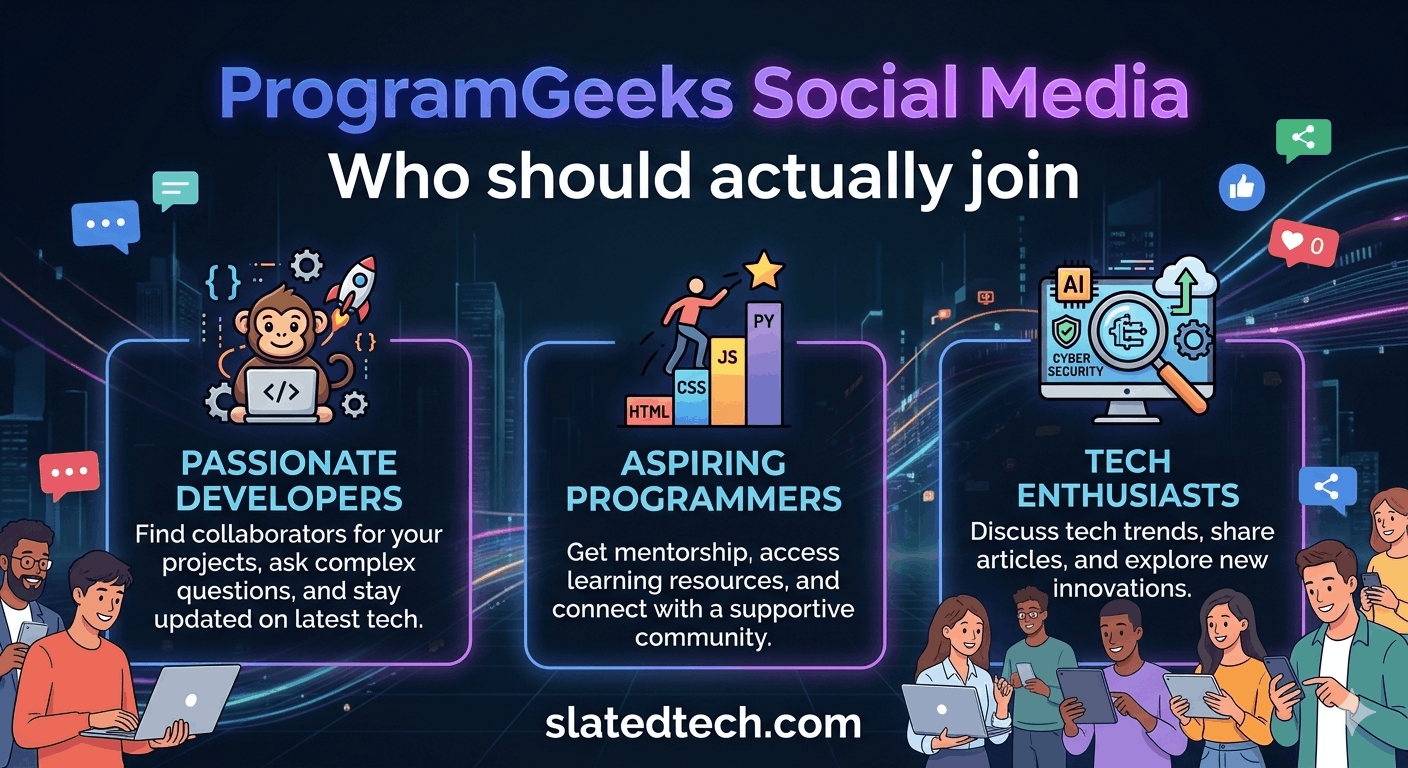
Not everyone needs another login. Here’s where I land on programgeeks social, by who you are.
| If you’re a… | Worth joining? |
|---|---|
| Student or self-taught coder | Yes ✅ — the library and friendly Q&A are gold |
| Mid-level dev wanting community | Yes ✅ — great for projects and mentoring |
| Senior dev with a packed network | Maybe ⚠️ — you may not need it yet |
| Recruiter or marketer | No ❌ — this isn’t your room |
| Allergic to extra platforms | Skip it ❌ — wait for the crowd to grow |
So, is it worth it in 2026?
For most coders, programgeeks social media is worth a free account. The focus is genuine, the features fit how developers actually work, and trying it costs you nothing but a signup form.
I’d hold off on premium until you’ve felt the community for yourself, and I’d size my expectations to a young platform: smaller crowd, fewer jobs, but cleaner conversation than the giants offer. If you want a calmer place to talk code and maybe meet your next collaborator, sign up, lurk for a week, and you’ll know fast whether programgeeks social is your kind of room.
Also Read: MenBoosterMark Software Program
Also Read: How to Improve My Gaming LCFTechMods
FAQs
Is programgeeks social media free to use?
Yes. The core of programgeeks social is free, including the forums, your profile, community groups, and most tutorials. There’s an optional premium tier that adds deeper resources and exclusive webinars, billed monthly or yearly. Start free and only upgrade if you hit the limits.
Is programgeeks social safe?
It uses moderation tools, community guidelines, and reporting features to keep spam and harmful posts down, and it claims standard security like encryption and privacy controls. Still, public info is limited, so read the privacy policy and guidelines yourself before you commit time or money.
How is it different from LinkedIn or Reddit?
LinkedIn covers every profession and Reddit covers every topic on earth. Programgeeks social media sticks to one thing: programming and the people who do it. That narrow focus is the point, since it means a cleaner feed and answers from people who actually write code.
Can I find a job through programgeeks social?
You can. There’s a developer-focused job board plus networking, portfolio visibility, and members who report landing mentors and remote roles. Just keep expectations realistic: the pool is smaller than the big platforms while the community is still growing.
Who should join programgeeks social?
Students, self-taught coders, and mid-level developers get the most out of it, especially for learning, projects, and mentoring. Senior devs with a deep network might not need it yet, and recruiters or marketers will feel out of place.
Is premium worth paying for?
Not on day one. Use the free plan for a few weeks first. If you’re logging into programgeeks social media daily and keep running into paywalled tutorials or webinars you want, then premium starts to make sense. Otherwise the free tier is plenty.
COMMENTS